While there’s no silver bullet for kochia, research shows that combining chemical and cultural practices can help manage this weed and slow its spread.
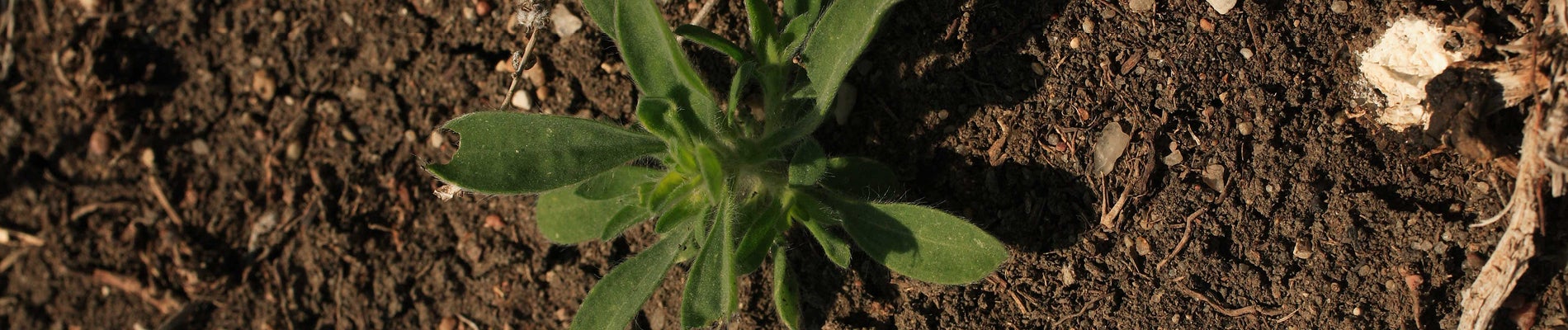
Everyone knows that kochia is a challenging weed in Western Canada. It emerges early in cool spring soils, often before crops are even planted. It produces large amounts of seed that disperse widely and it thrives in dry, hot and saline conditions where crops may struggle.
Kochia has also developed resistance to multiple herbicide groups across the Prairies, which makes single-pass or single-mode-of-action herbicide approaches increasingly unreliable.
Because of this biology and resistance pressure, effective management requires a more complete approach – one that addresses both early-emerging plants and later germinating flushes through the season.
Having studied kochia for years, Charles Geddes would be the last person to minimize the headaches associated with this weed.
Even so, the Lethbridge-based weed scientist with Agriculture and Agri-Food Canada is inclined to see kochia as a glass-half-full situation. Despite the challenges, there’s still a lot that growers can do to stay ahead of the weed. His research points the way.
Herbicide and cultural practices
Dr. Geddes and his team studied kochia management over a four-year crop rotation – wheat, canola, wheat and lentils – integrating both cultural and chemical practices.
The goal was to develop management strategies that take advantage of the biology and ecology of kochia while reducing resistance pressure.
The research team mapped out how to use available herbicide modes of action in combinations applied at different stages — pre-emergent, post-emergent, in-crop, pre-harvest and post-harvest. This layered approach, often referred to as herbicide layering, helps ensure that kochia is exposed to multiple modes of action throughout the season.
Solutions that combine burnoff activity with extended residual control can play an important role in this strategy by managing both emerged kochia and later germinating plants. By maintaining cleaner fields longer, herbicides that deliver multiple modes of action and longer-lasting control can strengthen resistance management and reduce the likelihood of escapes.
But herbicides are only part of the answer.
A well-planned crop rotation also helps keep kochia on the defensive, and fall-seeded crops shouldn’t be overlooked.
Dr. Geddes has examined crop rotation diversity in his research. In one experiment, a spring wheat–canola–spring wheat–lentil rotation was modified by replacing one spring wheat crop with winter wheat.
“We’re trying to promote a competitive crop rotation,” says Geddes, “because kochia tends to respond to crop competition. It responds by reducing the amount of seed the plant produces.”
Winter wheat can be especially helpful because it competes strongly with early-emerging kochia in the spring and is harvested before kochia produces viable seed.
Two additional ways of increasing crop competitiveness also showed strong results: narrower row spacing and higher seeding rates.
“Decreasing row spacing showed a 60 per cent decrease in kochia biomass in all crops,” says Geddes. “Adding this type of cultural management is essentially like adding another herbicide to the tank.”
Combining stronger crop competition with diversified herbicide strategies can significantly reduce kochia pressure and help slow resistance development.
A community approach
However, managing kochia effectively may require more than individual farm efforts.
If only one farmer in a region takes a diligent approach to kochia management, the benefits may be limited. Kochia produces abundant seed that can travel long distances, meaning new infestations can easily blow in from neighbouring fields.
That’s why Geddes believes community-level management strategies could make a meaningful difference.
“There’s a lot of opportunity for community-based strategies,” he says. “For example, farmers within a region could commit to managing kochia aggressively for several years in a row. Combined with cultural and chemical practices, that kind of coordinated effort could make a big difference over time.”
Want to learn more about kochia? Check out this webinar presented by Charles Geddes, along with this special 16-page kochia supplement developed for you by FMC.