How to Assess Crop Maturity Before a Pre-Harvest Dry Down Application
When it comes to pre-harvest dry down, timing is everything. If you apply too early, you risk interfering with crop maturity. Apply too late, and you may miss the opportunity to improve harvestability. That’s why knowing how mature the crop is can help determine whether a pre-harvest application is the right fit for your field.
While green stems, late-season weeds and uneven crop maturity often draw attention as harvest approaches, the decision to apply a pre-harvest dry-down tool should always start with one question: Has the crop reached physiological maturity?
Don’t Judge the Crop From the Road
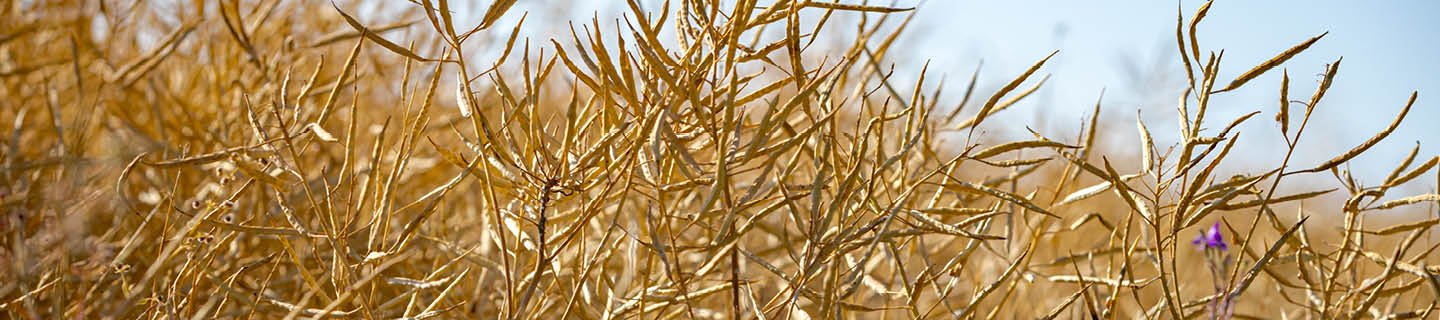
As harvest nears, it’s common to see canola fields that still appear green from a distance. Green stems, leaves in the lower canopy, and patches of late-season growth can make a crop look less mature than it actually is. However, appearance alone doesn’t tell the whole story. The most reliable way to assess crop maturity is to get into the field and evaluate seed maturity throughout the canopy.
What Is Seed Colour Change?
Seed colour change refers to the progression from green seed to mature seed colour. For pre-harvest dry-down applications, growers should target approximately 80% seed colour change on the main stem. At this stage, most seeds have transitioned from green to brown, black or their mature colour, indicating the crop has reached physiological maturity.
The goal is not to eliminate every green seed in the field. Rather, it is to ensure the crop has advanced far enough that yield and quality potential have already been established.
Look Beyond the Top Pods
One of the most common mistakes is assessing only the upper portion of the plant. Canola maturity varies throughout the canopy, so evaluating the entire plant is important.
When staging a field:
- Pull plants from several representative areas
- Open pods from the top, middle and lower canopy
- Assess seed colour change throughout the plant
- Focus on the main stem while considering overall field uniformity
The middle portion of the canopy often provides the most accurate picture of crop maturity.
Why Green Stems Can Be Misleading
Green stems are one of the main reasons growers consider a pre-harvest dry down application. However, green stems do not necessarily mean the crop is immature.
In many cases, seeds have already reached maturity while stems remain green and tough. These stems can create challenges at harvest, slowing cutting speeds and reducing overall efficiency. This is where harvest management tools may play a role.
Consider the Whole Harvest Picture
Crop stage is only one factor in the decision. Growers should also consider:
- Green stems and uneven plant dry down
- Late-season weed pressure
- Field variability
- Harvest equipment capacity
- Expected weather conditions
- Planned harvest timing
The objective is not simply to harvest sooner, but to create a more uniform crop that can be harvested efficiently when conditions are right.
Supporting a More Uniform Finish
Once canola reaches the appropriate stage, pre-harvest dry-down tools can help speed the dry down of green plant material and weeds that may interfere with harvest.
Used with glyphosate, PrecisionPac® FH-20 herbicide blend is designed to support more uniform crop dry down, easier crop cutting, and improved harvest efficiency while contributing to cleaner fields the following spring.
As with any crop protection product, always read and follow label directions and ensure applications are made at the appropriate stage of maturity.
Because when it comes to harvest, success often comes down to how well the crop finishes.