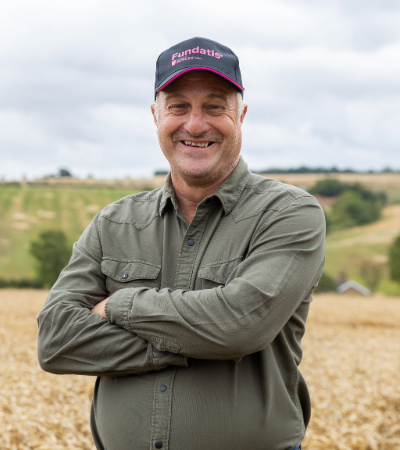
MARK STUBBS
Meet the Fundatis® Herbicide Grower Group
Mark Stubbs runs his two family two farms in Lincolnshire in partnership with his parents.
One of the farms, which is close to the coast, consists of 110ha with a rotation of winter wheat, spring barley and one year legume fallow.
The coastal farm has heavy clay spoils, which are prone to weed issues, while the second farm in the Wolds is mainly clay loam with chalk stone.
I would say blackgrass is our biggest weed problem, but we have been managing it quite well so far.
We have more blackgrass than I would like, but I mainly put that down to spring germination, where I have fewer tools available to combat the weed.
Contending with blackgrass has been a challenge on the farm. Over time, I've married traditional farming practices with chemical solutions to effectively combat the weed.
I've found success in delaying my drilling schedule to the last week of October or even the first week of November.
This later drilling means a good number of blackgrass seeds germinate ahead of planting allowing me to spray them off and get a good control ahead of the season.
Location: Lincolnshire
Arable hectares: 700ha
Average cereal hectarage: Spring barley 130ha and winter wheat 280ha
Soil type: Medium soil – sandy/clay loam
Crops in rotation: Spring barley, winter wheat and OSR
Grass weed issue: Blackgrass