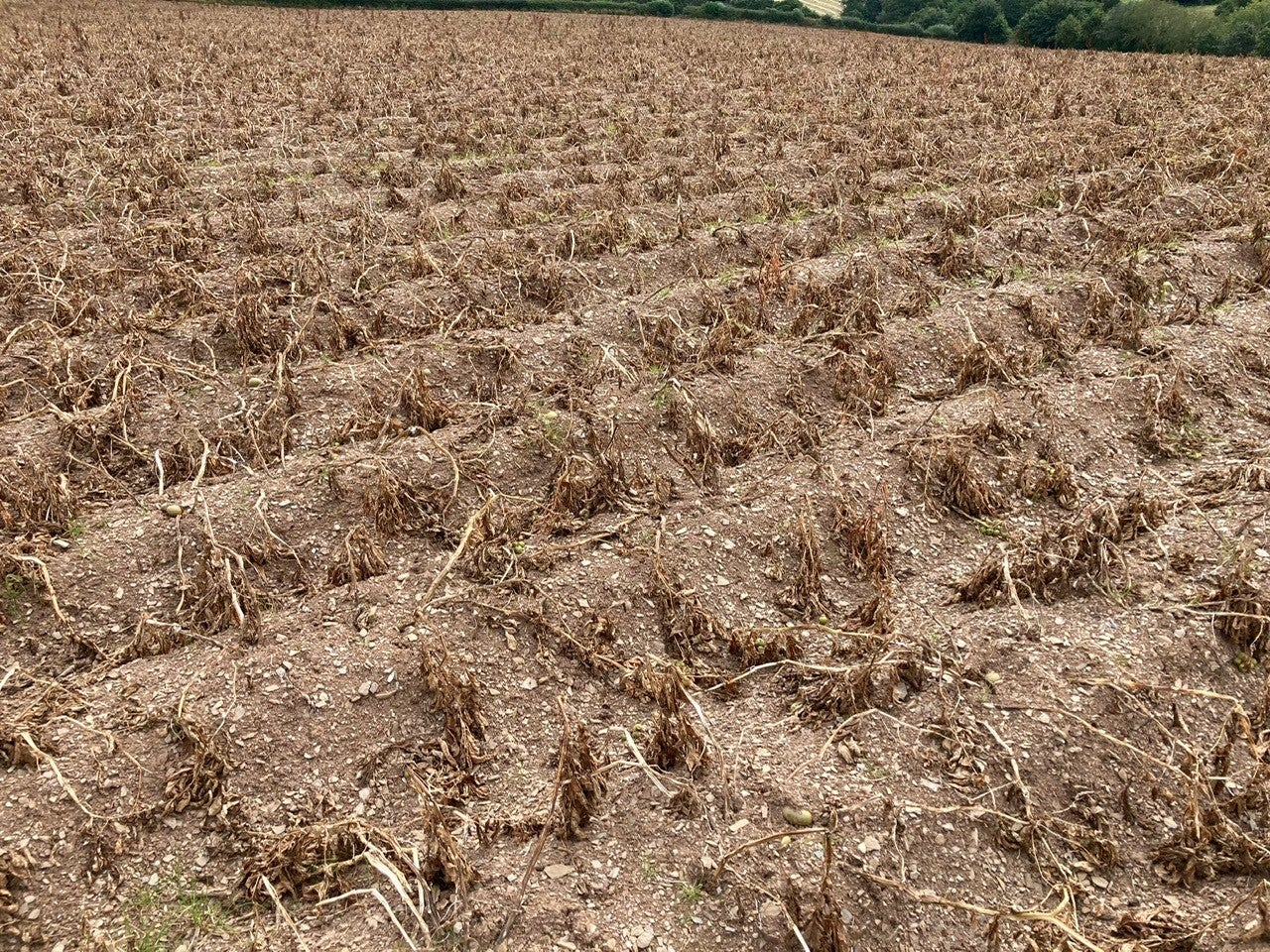
Spotlight® Plus containing carfentrazone - ethyl is the go to choice for efficient and highly crop safe potato desiccation. Flailing and spraying still gives the best performance when it comes to effective desiccation.
The recent high temperatures that England has been experiencing has raised some questions in terms of desiccation performance. While our general guidance remains the same (see desiccation decision tree) for hotter conditions, (over 30oC) take a moment to consider and maybe modify the desiccation approach for your potato crop:
The mode of action of carfentrazone-ethyl is a PPO inhibitor (protoporphyrinogen oxidase inhibition). In practice this means that brighter and warmer conditions can improve performance as free radical production is accelerated, destroying cell membranes, stopping photosynthesis and breaking down cells more rapidly than in dull, cold conditions.
Key things to remember
High temperatures may adversely affect spray deposition, dry-down, leaf wax and crop response.
SO:
- If possible, spray earlier in the morning to optimise deposition. Later, bright conditions will still facilitate rapid desiccation
- Consider humidity. Low relative humidity combined with high temperatures could cause patchy coverage. Spray droplets may dry rapidly before sufficient uptake of the active substance occurs
- A drought stressed potato haulm may respond less uniformly
- Assess and amend irrigation timings if required
Reconsider your water volumes in extreme heat conditions. Follow the label with a minimum water volume of 300L/ha. This is especially important when applying to dense canopied potato crops. High light intensity will improve Spotlight® Plus efficacy. However, the effect of high temperatures on spray deposition and crop response should be considered. By adapting application timing and technique where necessary, growers can continue to achieve reliable and effective potato desiccation, even during periods of extreme heat.