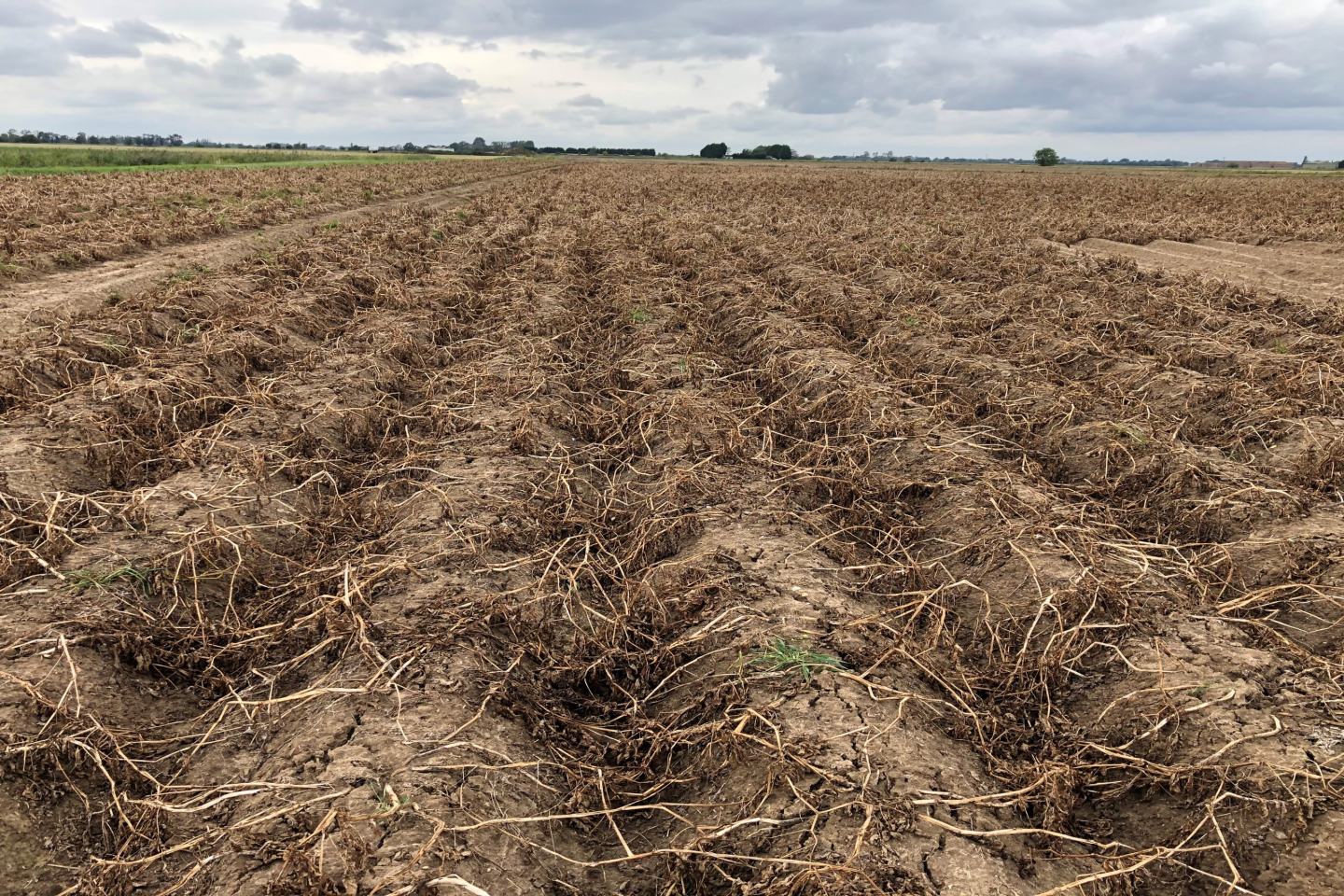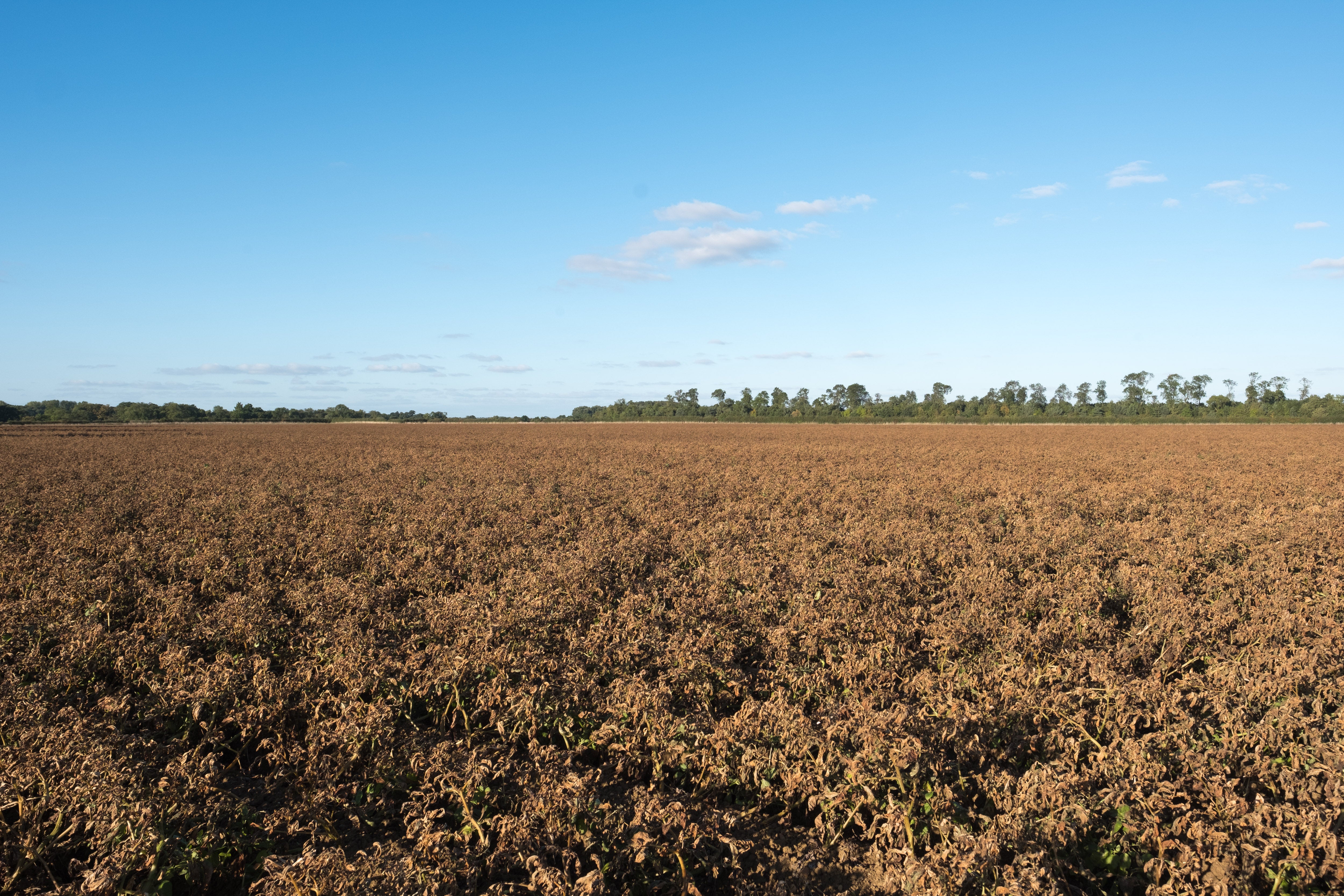
With the current potato market battling oversupply, leaving farmers facing price challenges, ensuring good crop quality could improve end marketability. Antonia Walker, Commercial Technical Manager for the north of England and Scotland at FMC, lends her top tips for optimal desiccation and early planning this season.
Potato storage revolves around having a good skin, says Adrian Cunnington from Potato Storage Insight.
“When it comes to storing potatoes, having intact skin is crucial for preventing excessive moisture loss and preserving the potatoes from external threats,” he says.
“If you don't have good skin set, then you end up with the potatoes having a high weight loss in store, which you sell by. So, if you get excessive shrinkage, it also affects potato quality, and if disease comes in, that will also affect the quality of the potatoes; at worst, it could also cause rotting”.
A potato is made up of 80% water, and therefore, farmers should aim to preserve as much of that as possible during storage, whether that be two months or ten months, particularly as a potato is a living organism and generates heat from respiration, says Adrian.
“We must use ventilation and, in some cases, refrigeration to cool the crop down. But whenever we're putting air through the potatoes to do that, there's always the risk that air removes moisture from the skin through evaporation; even if you get an intact skin, moisture still evaporates through it. So, if your skin set is not good enough, that rate of evaporation is higher”.
To achieve a good skin set, farmers can act pre-harvest.
“The main thing to do pre-harvest is to make sure that you're getting the crop to reach skin set before you want to harvest. So, you need to desiccate the crop in time to get a strong skin before you try to lift the potatoes”.
“If you don't get the foliage down to the right level, you won't get enough skin set, and you'll have problems with the crop being damaged as you lift it, with more moisture loss in store,” says Adrian.
Desiccation timing
Desiccation timing is crucial for farmers to ensure that potato quality reaches its peak for packers and processing contracts. By desiccating at the right time under optimal conditions, farmers can improve the chances of cleaning and storing the product more effectively, says Antonia Walker
“The art of desiccation is incredibly important, because it affects the overall product; for example, if you're lifting in wetter conditions having desiccated, all these factors have a knock-on effect as to how that product ends up being marketed and stored,” says Antonia.
When planning desiccation, Antonia notes that application is needed after flailing, at least 21 days before lifting dates, to ensure the correct skin set farmers aim for and to prevent additional blight infections from entering the tubers.
How a Protoporphyrinogen Oxidase (PPO) inhibitor works:
Protoporphyrinogen oxidase (PPO) is an enzyme in the chloroplast cell that oxidises protoporphrinogen IX to produce protoporphrin (PPIX) (a precursor molecule for both chlorophyll and heme).
Spotlight Plus is a PPO inhibitor that produces highly reactive molecules that attack and destroy lipid and protein membranes, leading to cell disintegration, breakdown of plant material, and ultimately killing the plant.
“One thing to remember, with this mode of action, is that you can often see the results within one or two hours of application, which looks like some water-soaked marks on the foliage, and then you end up with the eventual necrosis of the actual tissues,” says Antonia.
Determinate vs indeterminate
Whether a determinate or indeterminate variety of potatoes has been planted, a benchmark date for application is useful but needs to align with the correct conditions, says Antonia.
“When it comes to determinate and indeterminate varieties, we would often be looking at some form of decision tree in terms of when we'd be programming how to desiccate the potato crop in question. The key things to remember with desiccation are that you must ensure you've got the right conditions, which is critical,” says Antonia.
Optimal Conditions and Application
When talking about desiccation and Spotlight Plus, Antonia recommends focusing on essential conditions and the timing of applications. For example, she advises applying after flailing when the sun is shining brightly, and temperatures are at their peak, since PPOs are most effective under these conditions. This allows the active ingredients to perform optimally.
“We prefer to flail the crops first and then apply Spotlight Plus, with two days being the absolute maximum latest timing after flailing. And we always advise using at least 300 litres of water”.
“We recommend monitoring the crop post the first application to ensure that if any regrowth does occur, this can be followed up with another application at 0.6 litres”.
By optimising conditions, farmers can achieve better skin set and storage, thereby enhancing marketability.
Three key things to remember for Spotlight Plus Application:
- Time of day: Apply mid-morning or mid-afternoon when conditions are hot and sunny to enable the PPO’s active substance to work at its best.
- Use plenty of water: Recommended use at medium spray to ensure good coverage, using a minimum of 300 litres per hectare.
- Operator checks: Check your boom height and forward speed.
Harvest Intervals and tank mixing
Spotlight Plus can be tank-mixed with a fungicide and does not require any wetters. Compared to other products on the market, Spotlight Plus offers a shorter harvest interval of just 7 days.
“It is also important to note that using another desiccant in the same tank mix doesn't give any added benefit and is a waste of money. You either use one or the other. That's the important thing to remember,” says Antonia.
“The key benefit here is that farmers can use it on its own or in sequence, at seven-day intervals, and this can be done with other approved desiccants”.
Find our potato desiccation decision tree here