A side dress application may be one of the most underutilized in-season trips across a corn field. Though long reserved for in-season nitrogen, that same pass is an additional opportunity to help protect a plant — and its yield potential — before foliar disease pressure takes hold.
In recent seasons, foliar diseases like tar spot1, gray leaf spot and Northern corn leaf blight have become more prevalent and stolen billions of dollars in yield potential from farmers. According to the Crop Protection Network, an estimated 1.3 billion bushels of corn were lost in 2025 alone to diseases. Under that level of disease and financial pressure, more options are needed to build disease defense.
Timing is one of a fungicide’s most significant limiting factors
Corn disease development is highly dependent on hybrid susceptibility and unpredictable seasonal weather conditions, making fungicide timing one of the most difficult variables to manage. Applied too early, protection may not last through the peak period for disease pressure. Applied too late and you are behind the eight-ball, with yield losses already accumulating. That narrow margin for getting fungicide timing right has pushed growers to rethink how and when a fungicide fits into their management programs.
“One thing that’s predictable with farming is unpredictability,” says Adam Byrne, FMC technical service manager. “We don’t know from year to year what diseases are going to be the problem or when they will emerge. Protecting corn proactively is important because it gives you the leg up when those problems arise.”
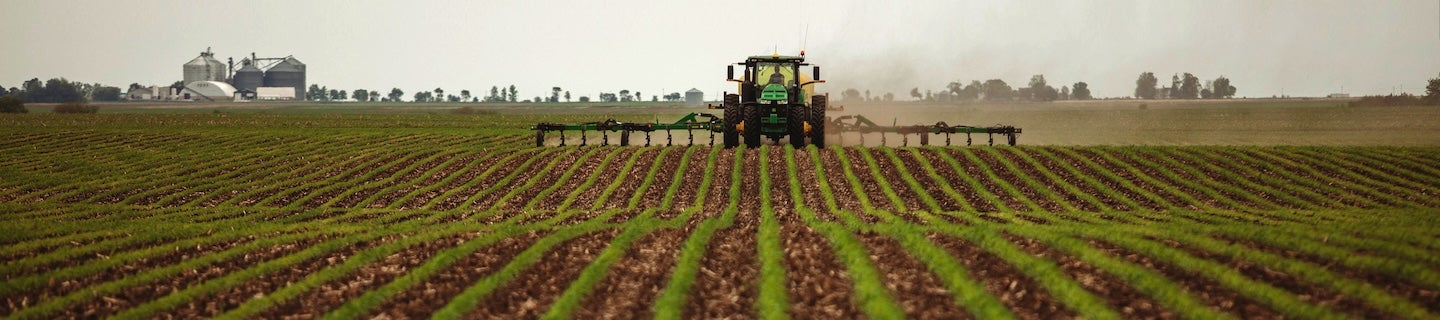
This is where the side dress window can play to growers’ advantages. The side dress application period aligns with a critical stage of corn development. As plants enter rapid vegetative growth, growers are focused on nitrogen management to support yield potential, while the crop simultaneously begins building the canopy that will drive photosynthesis through grain fill. This overlap of crop development and field operations creates a unique opportunity: pairing fertility with proactive disease management in a single pass.
More importantly, it helps address one of the biggest challenges in fungicide programs — uncertainty in optimal application timing. By aligning disease protection with a side dress application, growers can improve operational efficiency while helping extend protection earlier in the season; however, that approach requires fungicide technology designed to work differently than traditional foliar applications.
Inside-out protection with Xyway® LFR® fungicide
Xyway® LFR®, formulated with the unique active ingredient flutriafol, is designed to move systemically within the plant, providing long-lasting residual protection against key foliar diseases before they emerge. Once applied to the soil, Xyway® LFR® is absorbed through the roots and moves upward through the plant as it grows. This systemic movement extends protection into new plant tissue as it develops, not just the foliage present at the time of application.
“Because flutriafol moves upward with the plant, growers are not just protecting the leaves that are there at application,” Byrne states. “They are helping protect the leaves that are still developing, providing that inside-out protection.”
This movement through the plant helps protect the full canopy from the lower leaves to the upper canopy as vegetative growth continues and disease pressure begins to build.
In addition to disease suppression, Xyway® LFR® has been associated with measurable plant health benefits in university research, including improved root development, enhanced water use efficiency and improved nutrient uptake. These physiological benefits contribute to stronger plant establishment, improved resilience during periods of stress and a healthier canopy later into the season that sustains photosynthesis during the critical grain fill period.
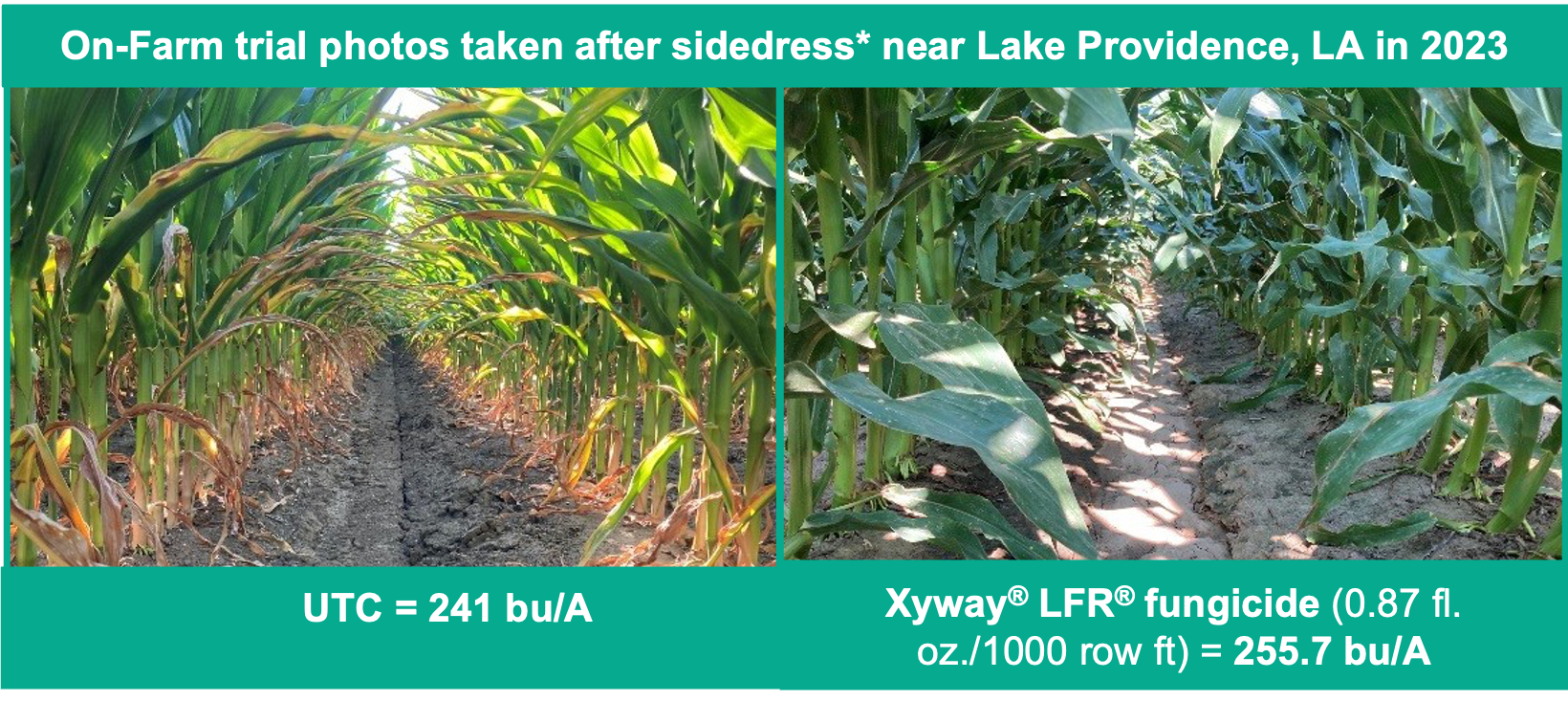
Integrating Xyway® LFR® Into the Side Dress Pass2
The Liquid Fertilizer Ready (LFR) formulation of Xyway® LFR® is designed for superior mixing and compatibility with liquid fertilizers, allowing it to be integrated directly into side dress applications.
Standard practice includes applying Xyway® LFR® at least 0.5 inches away from the plant, up to 15 inches off the row or via Y-drop. Field studies conducted by Purdue University have demonstrated corn roots will access the fungicide at that distance. The optimal application window is between V2 and V4, although Xyway® LFR® can be applied through the V6 growth stage.
“Several yield-robbing diseases like crown rot and stalk rot can start infecting as soon as V2 or V3, so getting ahead of them and applying side dress applications as early as possible is key,” Byrne states. “This gives the crop more time to take advantage of the inside-out benefits Xyway® LFR® provides.”
The Purdue University field trials evaluated side dress applications of Xyway® LFR® at the V6 growth stage and found performance comparable to at-plant applications in both yield and disease suppression. Across trials, side dress treatments delivered an average yield advantage of more than six bushels per acre. Notably, even without a follow-up foliar fungicide, late-season disease pressure, particularly for tar spot1, was significantly reduced.
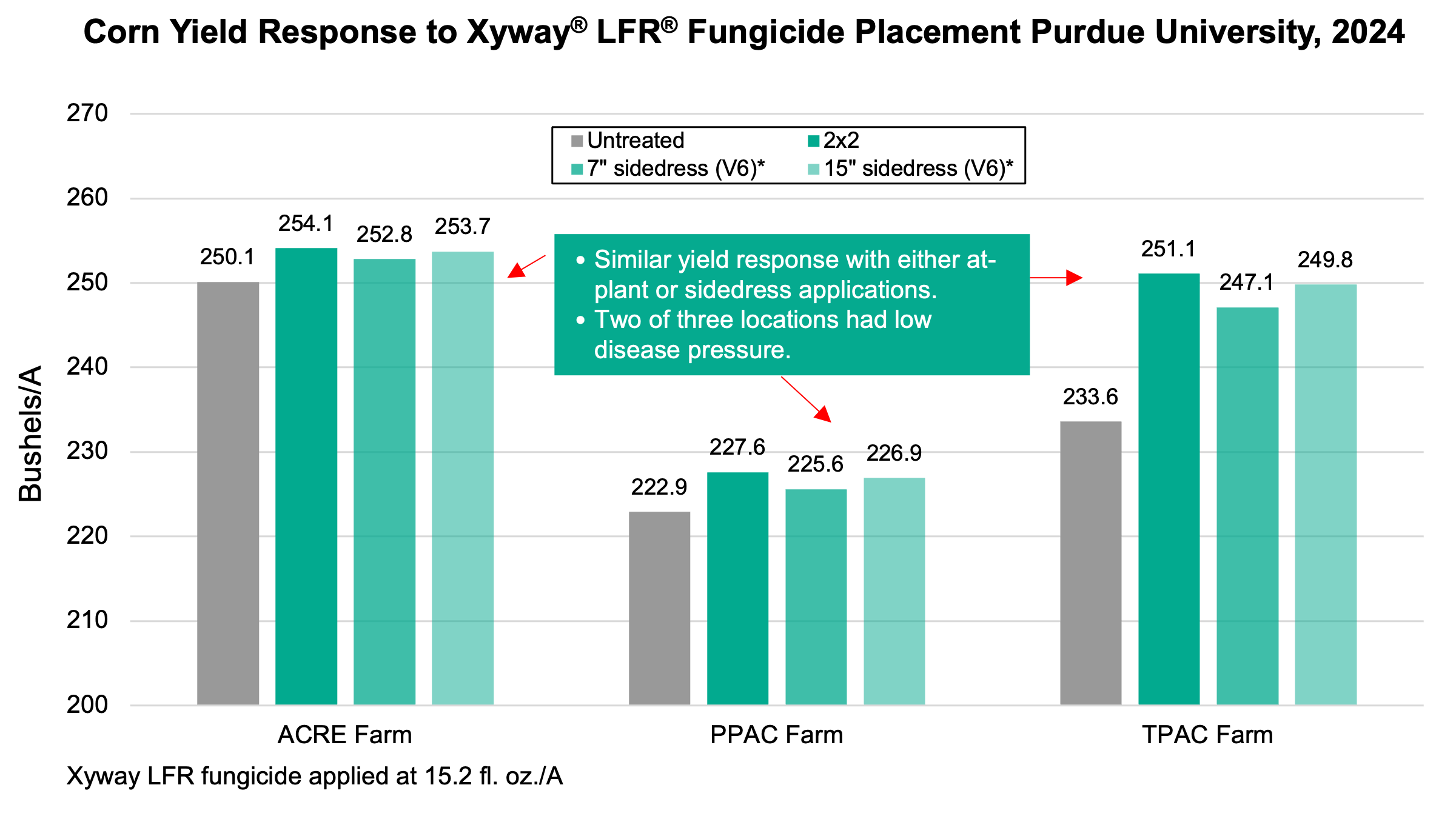
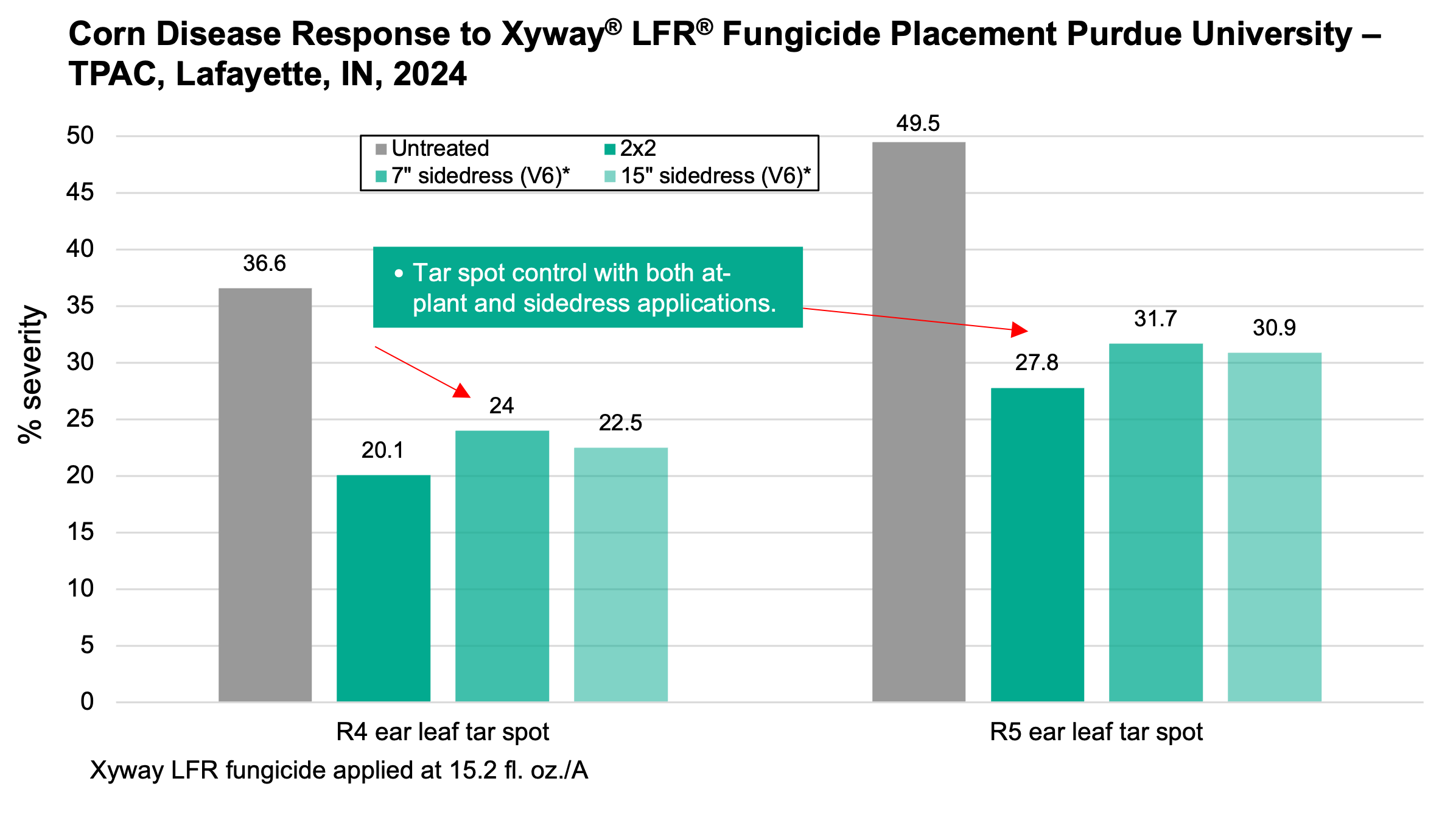
With the right tools, side dress becomes a strategic opportunity to strengthen the crop at a critical stage of development. By integrating Xyway® LFR® into this application, corn growers can extend protection earlier, support plant health from the inside out and align disease management with existing in-season operations. The result is a more efficient, proactive approach that helps safeguard yield potential during the most unpredictable stages of the growing season.
Talk to your local FMC retailer or FMC representative to learn where Xyway® LFR® fungicide fits in your corn disease management strategy.
1This Xyway® LFR® fungicide recommendation is made as permitted under FIFRA Sections 2(ee) for suppression of tar spot in corn. This recommendation has not been submitted to or approved by the EPA. The 2(ee) expiration date is 03/1/2028(all registered states except TX).
2This Xyway® LFR® fungicide recommendation is made as permitted under FIFRA Sections 2(ee) for side dress application in corn and grain sorghum. This recommendation has not been submitted to or approved by the EPA. The 2(ee) expiration date is 12/31/2030 (all registered states except TX) or 12/31/2028 (TX).
Results are based on field observations from specific conditions and may vary depending on factors including geography, weather and application timing.
Always read and follow all label directions, precautions and restrictions for use. Some products may not be registered for sale or use in all states. FMC, the FMC logo, LFR and Xyway are trademarks of FMC Corporation or an affiliate. ©2026 FMC Corporation. All rights reserved. 26-FMC-0776 05/26