Cotton root rot is one of the most economically damaging diseases impacting cotton growers across Texas, New Mexico and Arizona. Once established in a field, cotton root rot becomes a recurring annual challenge that can impact productivity for seasons to come, costing growers tens of millions of dollars annually in lost yield and quality.
Historically, growers have had limited effective management tools to address the disease during these early stages of infection. Today, management strategies increasingly focus on protecting the root zone before infection becomes established. In fields with a history of cotton root rot, the use of a precise at-plant fungicide is becoming a key tool for cotton root rot management.
A Pattern Written Into the Soil
Cotton root rot infection begins beneath the soil surface during early stages of root development when young plants are most vulnerable. The pathogen attacks the root system, disrupting water and nutrient uptake. Above-ground symptoms often include sudden wilting, followed by rapid plant death. By the time these symptoms become visible above ground, the damage is already irreversible.
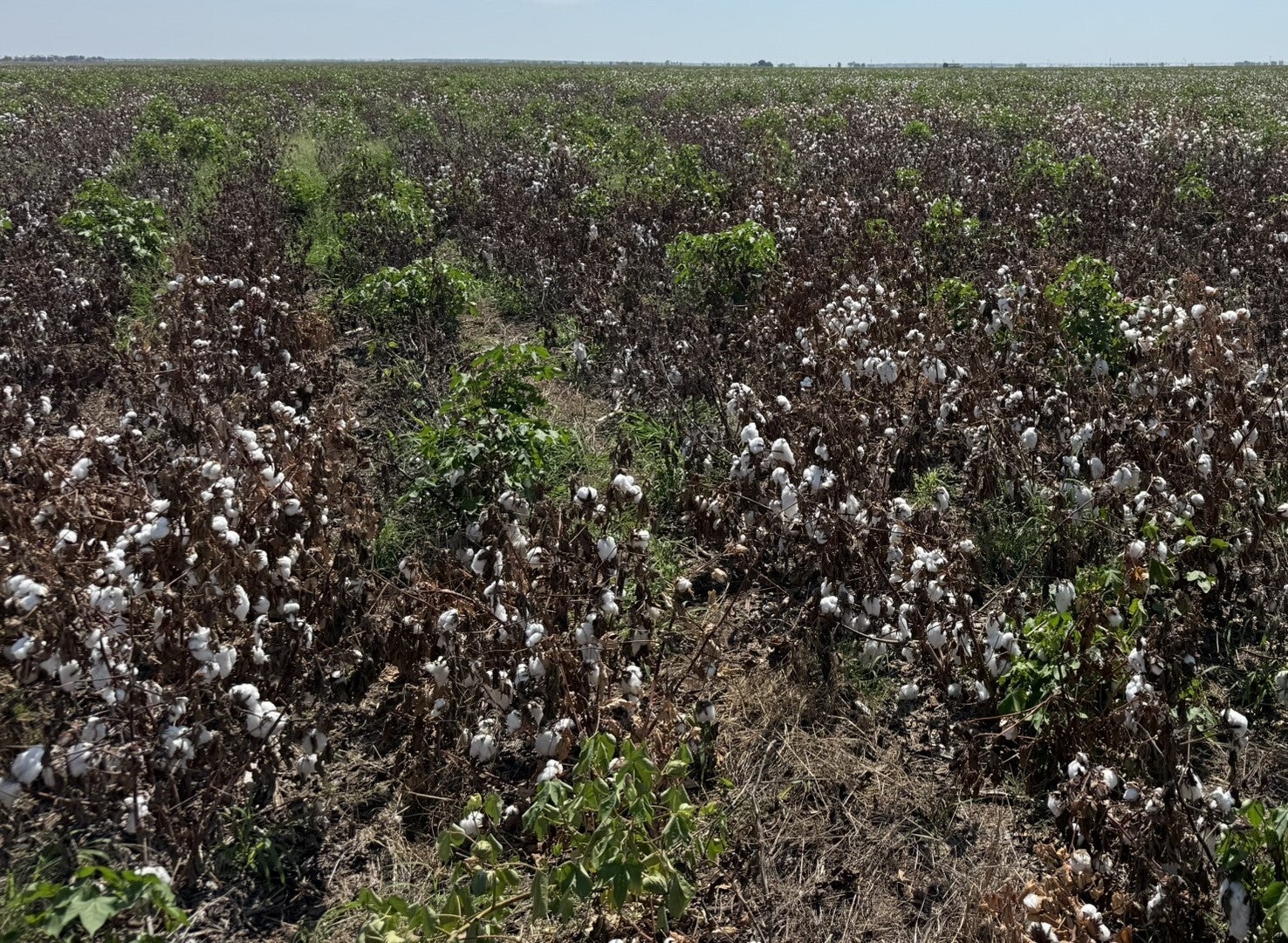
Wilting and plant death caused by the cotton root rot fungus.
“You can have a field that looks great as the crop starts to fill bolls and then come back a week later and see large areas that are completely dead,” says Holly Davis, Technical Service Manager for FMC. “It’s a really devastating disease.”
Confined largely to the Southwest, cotton root rot spreads slowly through the soil, expanding outward from established infection zones into nearby root systems. What appears to be a healthy stand one week can quickly become patchy, uneven and permanently compromised the next.
Beyond direct yield loss from premature plant death, the disease can reduce lint and seed quality. Research from the University of Arizona found the average raw cotton fiber yield losses from cotton root rot have been estimated at 2.2%, with losses reaching 8% to 13% in heavily infested fields. Harvest efficiency also may suffer, as brittle, dead stalks can interfere with cotton pickers and strippers.
While practices such as extended crop rotation to non-host crops may help temporarily reduce disease pressure, these approaches are often only marginally effective once cotton root rot becomes established. The pathogen can persist in the soil for years, waiting for another susceptible crop to infect.
“If cotton root rot is in a field, there’s really no getting rid of it,” Davis states. “It stays in the soil for years, so the focus is on managing it each season.”
Protecting the Root Zone
Given the early infection window and below-ground disease development of cotton root rot, management strategies that focus on proactive root-zone protection at planting offer the best opportunity to reduce disease severity, protect stand establishment, and preserve yield potential.
Xyway® LFR® fungicide is designed to align with this underground infection pattern. Powered by flutriafol, the active ingredient in Xyway® LFR® and the only proven chemistry to effectively manage cotton root rot, the product delivers targeted protection directly into the root zone during early crop development.
“What you’re doing with Xyway® LFR® is creating a protective column around that root,” says Eric Castner, Regional Technical Service Manager for FMC. “Cotton has a taproot, so you’re placing the fungicide where it can protect that root system as the plant develops.”
Application timing and placement are key factors to the fungicide’s performance. Xyway® LFR® can be applied in a T-band, modified in-furrow or 3- to 4-inch band on top of the row, with placement close to the root zone while avoiding direct seed contact. It also may be injected into the row up to 30 days prior to planting, 2 to 3 inches below the seed placement zone, or applied through drip irrigation where drip tape is no deeper than 12 inches below the soil surface. Adequate rainfall or irrigation is needed to help move the product into the infection zone.
In fields with a history of infection, proactive at-plant protection with Xyway® LFR® can be an integral part of broader disease management programs designed to preserve stand uniformity and yield potential throughout the season. Ultimately, cotton root rot management comes down to staying ahead of a disease growers often cannot see until damage is already done. By placing proven protection in the root zone at planting, Xyway® LFR® helps tie the management strategy back to where the disease begins.
Always read and follow all label directions, precautions and restrictions for use. Some products may not be registered for sale or use in all states. FMC, the FMC logo, LFR and Xyway are trademarks of FMC Corporation or an affiliate. ©2026 FMC Corporation. All rights reserved. 26-FMC-0776 06/26