
Almond Pest: Plant Bug
Plant bugs have become a tough challenge for almond growers, driven largely by the expansion of almond acreage in the last decade. Orchards now are facing increasing pressure from these pests, resulting in higher rates of brown spot damage and increased rejection rates. Among the most damaging plant bug species are green stink bugs and leaf footed bugs (LFB).
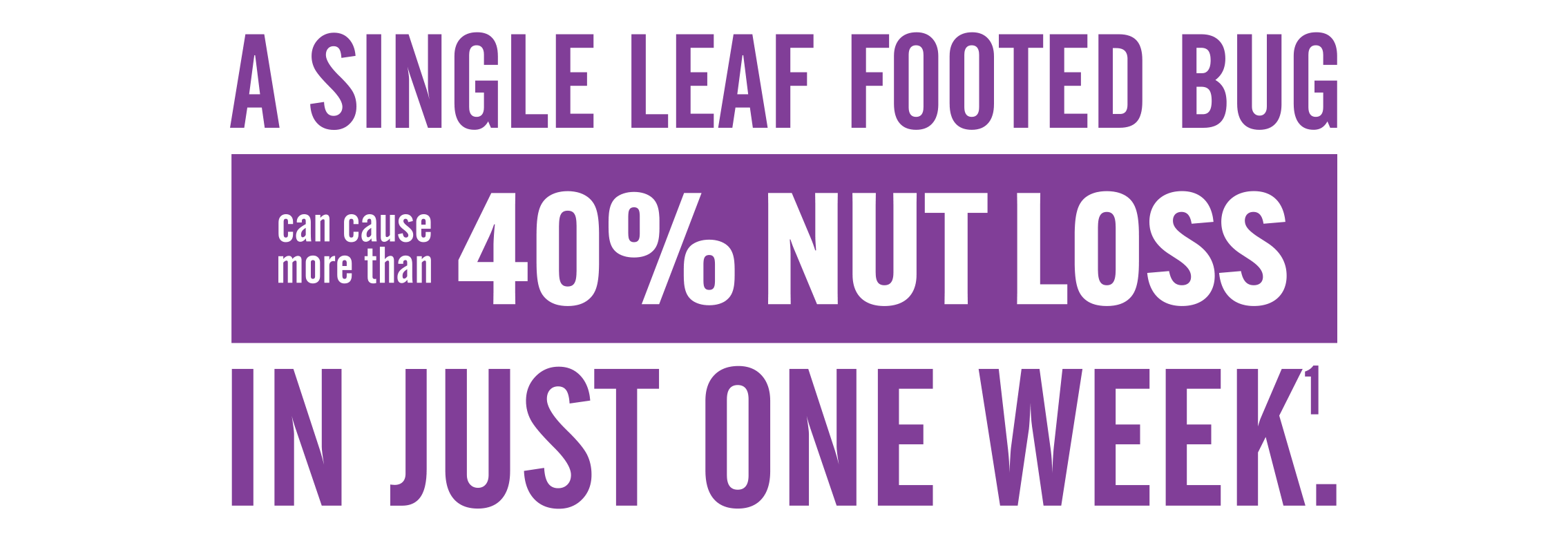
Once considered secondary pests, LFB and green stink bugs have risen to the forefront as primary threats. They are capable of generating significant nut loss at various stages in the growing season. Their damage leaves critical profits on the orchard floor instead of in grower’s pockets. For example, a single female LFB can cause up to 20% nut drop and 20% nut damage at harvest after just one week of feeding1.
While green stink bugs overwinter within the orchard or surrounding weeds, LFB overwinter in pomegranates and migrate into almond orchards early in the season when the crop is vulnerable. Once the nymphs merge, they target young almonds, using their piercing-sucking mouthparts to feed on the seeds. This feeding activity triggers nut drop and gummosis that contributes to reduced nut yield and quality. Even after the shell hardens, these pests continue to feed, causing black spots on the kernel or wrinkled, misshapen nutmeats that reduce crop marketability.
YOUR TOOLKIT TO SUCCESS
FMC has effective and reliable integrated pest management tools to manage leaf footed plant bug and green stink bug early in the season. See how Avaunt® eVo insect control can be utilized in your pest management strategy to protect your orchard.

Late Dormancy
AVAUNT® EVO INSECT CONTROL
Apply Avaunt eVo insect control at 6.0 oz./A as required by scouting from late dormancy until mid-May. Timing and frequency of applications should be based on insect population and threshold.
References
1 Haviland, David and Viveros, Mario. Leaffooted Bugs in Almonds. UC Cooperative Extension, Kern County. 2006; 2.
The EPA label for Avaunt® eVo insect control contains the following statements: This product is highly toxic to bees exposed to direct treatment on blooming crops or weeds. Do not apply this product or allow it to drift to blooming crops or weeds if bees are foraging the treatment area.
Always read and follow all label directions, precautions and restrictions for use. Some products may not be registered for sale or use in all states. FMC, the FMC logo and Avaunt are trademarks of FMC Corporation or an affiliate. ©2025 FMC Corporation. All rights reserved. 25-FMC-2492 01/24