
Almond Pest: Navel Orangeworm
Navel orangeworm (NOW) is one of the most destructive pests threatening almond orchards, capable of causing significant yield losses and reduction in crop quality. Severe infestations of this pest can cause direct damage exceeding 30% of the yield, while just 2% damage can lead to estimated losses of up to $158.75 per acre1. In recent seasons, a combination of factors is elevating the impact of NOW and making management a constant challenge for almond growers.
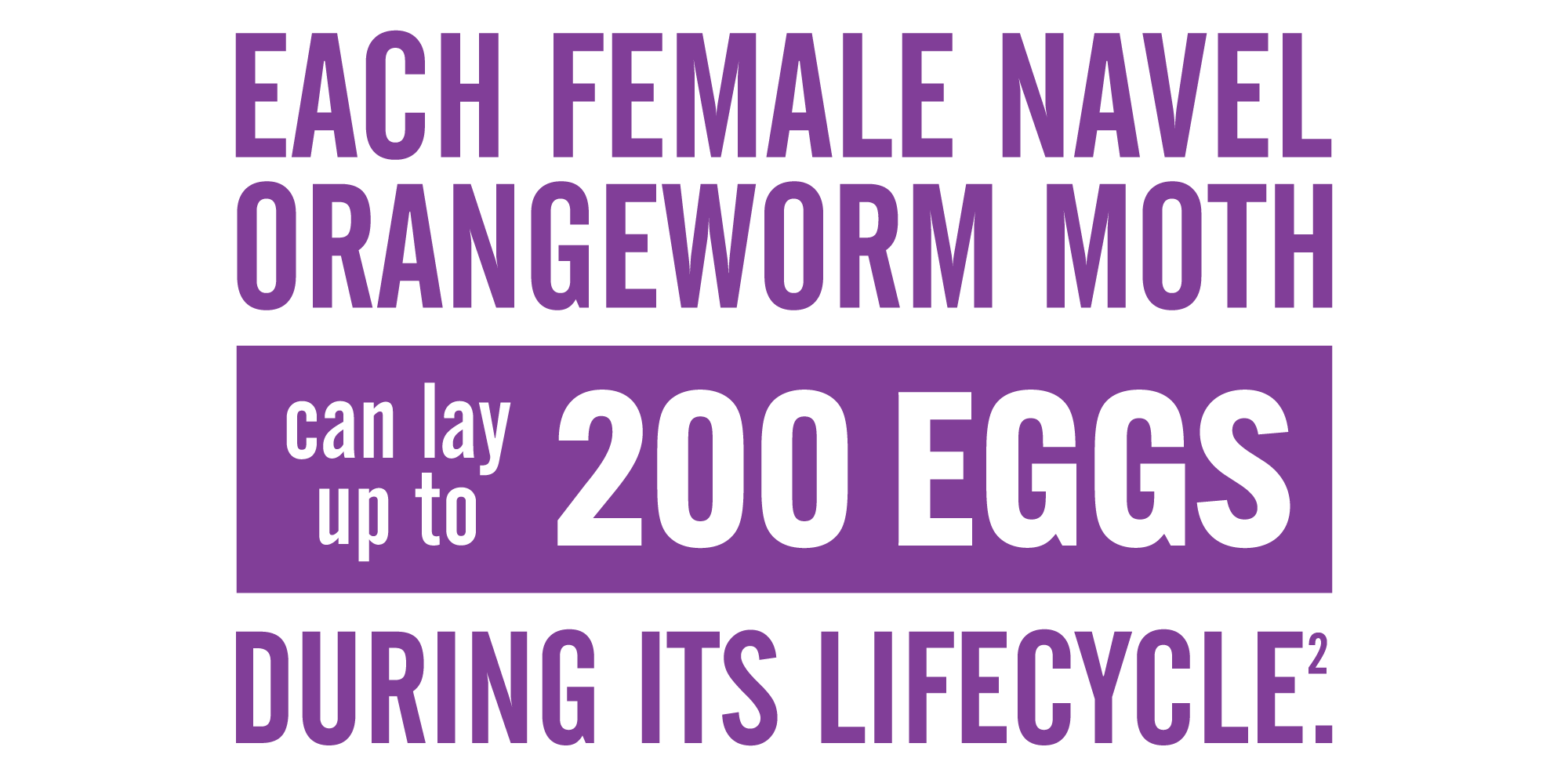
This insect can produce multiple generations per year, and more consistent warmer temperatures are accelerating the pest’s lifecycle. Almond growers contend with three to four generations annually, creating heightened pressure on management strategies, operational efficiency and input budgets throughout the entire growing season.
The damaging cycle all begins with NOW larvae that overwinter in mummy nuts left on trees or the orchard floor after harvest, emerging as moths in the spring. These larvae burrow into nutmeat at hull split, causing direct damage to the almond kernel and exposing it to secondary infections. Among the most concerning of these is contamination by Aspergillus mold, a producer of aflatoxins that can compromise food safety and reduce marketability.

EFFECTIVE AND RELIABLE IPM TOOLS FOR HIGH VALUE CROP PROTECTION
Effective NOW management requires a proactive, integrated, year-round approach. This strategy begins with thorough tree sanitation, including the removal and destruction of mummy nuts during the fall and winter months to reduce overwintering NOW larvae. A spring insecticide application in mid-to late April targets eggs and hatching larvae, followed by strategically timed insecticide treatments with a different active ingredient at hull split.
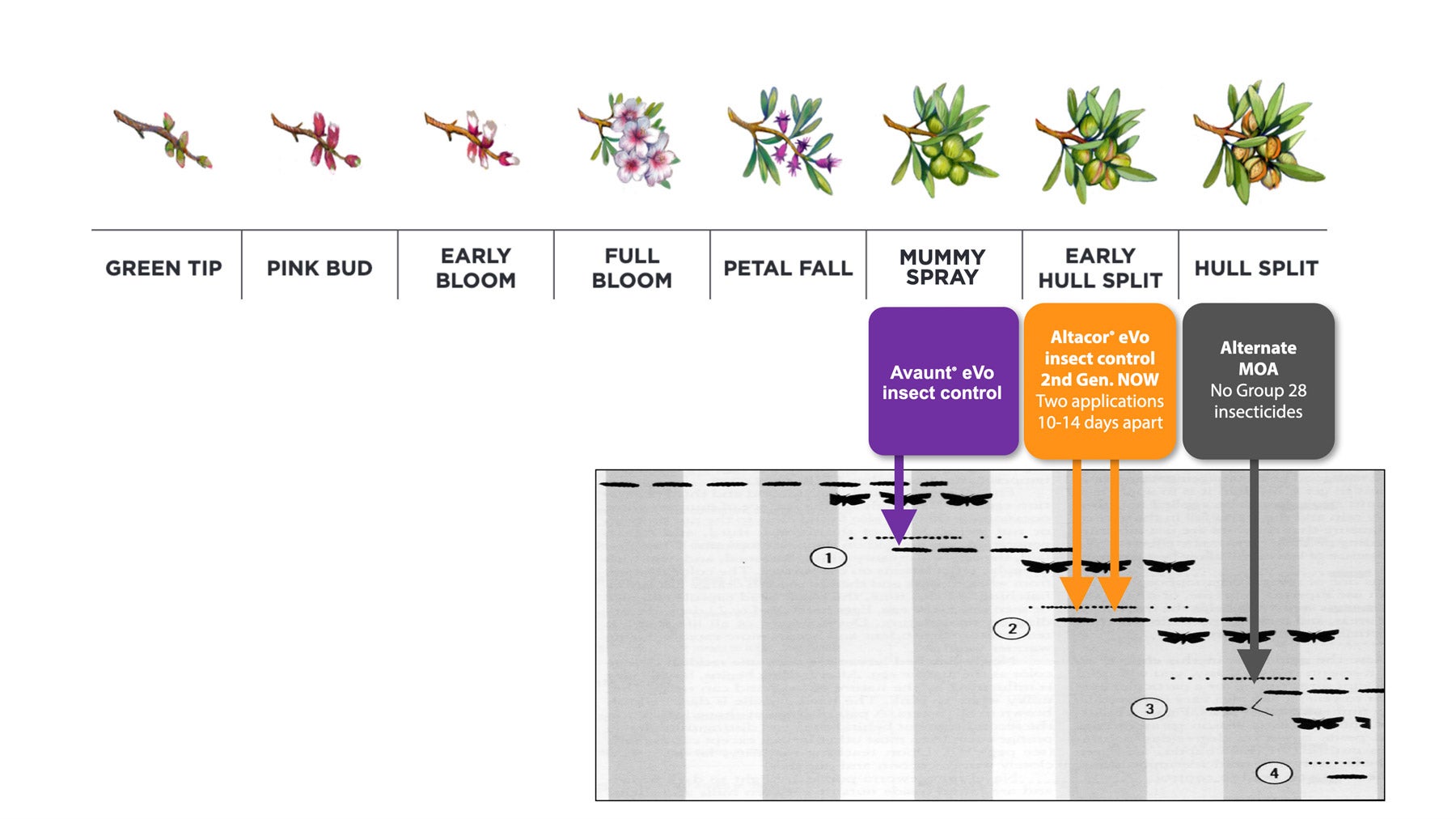
FMC has the right — and reliable — integrated pest management tools to effectively manage NOW. Avaunt® eVo insect control, applied during mummy spray, delivers rapid activity and residual control of NOW while avoiding secondary pest outbreaks like mites. With its unique mode of action, Avaunt eVo insect control has minimal impact on key beneficial insects and avoids cross-resistance with other insecticides, making it an ideal fit in IPM programs and an effective tool when used with Altacor® eVo insect control when managing NOW.
At early hull split, Altacor eVo insect control powered by Rynaxypyr® active, provides control of the second generation of NOW when almonds are most vulnerable to infestation. Two applications 10-14 days apart are required to target the different generations of NOW as they emerge.
Discover how Avaunt eVo insect control and Altacor eVo insect control can be included in your year-round NOW management strategy to protect almond orchards and increase return on investment.
PRODUCT APPLICATION AT THE FOLLOWING STAGES FOR OPTIMAL PEST CONTROL
Mummy Spray
AVAUNT® EVO INSECT CONTROL
Apply Avaunt eVo insect control at 6.0 oz./A starting at mummy spray in late April to mid-May.
Hull Split
ALTACOR® EVO INSECT CONTROL
At 1-5% hull split, apply Altacor eVo insect control back-to-back within 10-14 days, using the labeled rate of 2.2 oz./A.
References
1 California Almond Board. How Much Does NOW Damage Cost? [Slides] 2020; 11. Available online: https://www.almonds.com/sites/default/files/2020-03/How much does NOW damage cost_slides.pdf
2 Bragard C, Dehnen-Schmutz K, Di Serio F, Gonthier P, Jacques MA, Jaques Miret JA, Justesen AF, Magnusson CS, Milonas P, Navas-Cortes JA, Parnell S, Potting R, Reignault PL, Thulke HH, Van der Werf W, Vicent Civera A, Yuen J, Zappalà L, Malumphy C, Czwienczek E, Kertesz V, Maiorano A, MacLeod A. Pest categorisation of Amyelois transitella. EFSA Panel on Plant Health (PLH). 2021 Jun 25;19(6) https://doi.org/10.2903/j.efsa.2021.6666
The EPA label for Avaunt® eVo insect control contains the following statements: This product is highly toxic to bees exposed to direct treatment on blooming crops or weeds. Do not apply this product or allow it to drift to blooming crops or weeds if bees are foraging the treatment area.
Always read and follow all label directions, precautions and restrictions for use. Some products may not be registered for sale or use in all states. FMC, the FMC logo, Altacor and Avaunt are trademarks of FMC Corporation or an affiliate. ©2025 FMC Corporation. All rights reserved. 25-FMC-2491 01/24