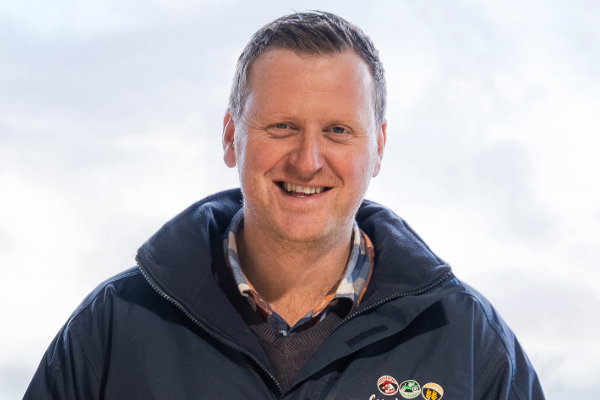
PETE OLDS
Meet the Fundatis® Herbicide Grower Group
Pete Olds' family has been farming at Cornhill Farm near Camborne, Cornwall, since 1912. Over that time, the farm has transitioned from a typical mixed farm to what operates today as a circular business – comprising arable, 17,000 free-range chickens and environmental stewardship.
While there is blackgrass and ryegrass in the area, these weeds are not key concerns for us. Our major issues are wild oats and brome, as well as some more recent issues with corn marigold.
With a mixed picture in terms of weed burdens, it's important to catch the weeds early, mix our chemistry, use multiple treatments where needed, and employ cultivation techniques like rotational ploughing to help control weed growth and prevent resistance.
Location: Cornhill Farm, Cornwall
Arable hectares: 160ha
Soil type: Sandy loam over shale
Crops in rotation: Winter wheat, winter barley and a break crop – usually a brassica
Fertiliser regime: Poultry and muck spread pre-drilling, base NPKS fertiliser in the spring, followed by a compound nitrate-based NS fertiliser, with a three-way split on the wheat and barley. The latter splits are variable rate, and calculated from satellite mapping on Omnia
Keep mixing up chemistry to avoid resistance issues
Catch weeds early to avoid over-reliance on chemistry
Don’t forget about the plough – it's a brilliant tool to help bury weeds