A very good pre-emergent herbicide followed by an early post-emergent herbicide and other techniques later in the season are helping farmers manage annual ryegrass.
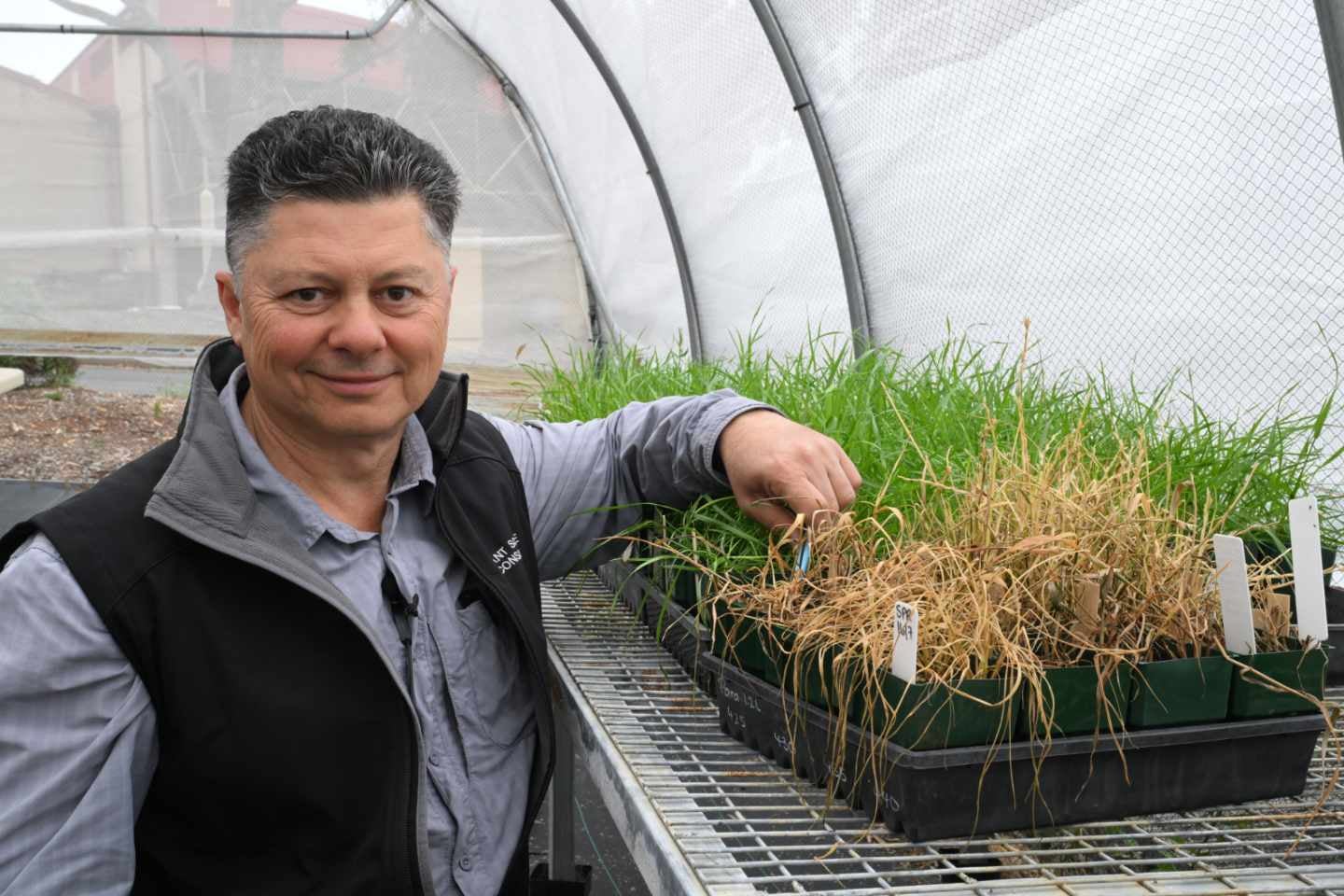
Dr Peter Boutsalis, of Plant Science Consulting, in Adelaide, South Australia, conducts farmer and company testing of resistant ryegrass in cropping areas throughout Australia.
“We’ve done a lot of studies, and the best way is to hit ryegrass really hard,” he said. “It might be a very good pre-emergent herbicide followed by an early post emergent herbicide, so you get two completely different modes of action.
“Anything that escapes, try some crop topping in the season, or catching it with a seed terminator, or some other seed capture device, and try to limit that plant from setting seed.”
Dr Boutsalis said they had conducted random weed surveys since 2005 across South Australia, Victoria and Tasmania to monitor shifts in resistance.
He said as new herbicides have come onto the market, they are also monitoring to see how resistance is changing as farmers are changing their practices.
“What we are seeing is that resistance to the in-crop herbicides is on the increase. In cereals we’ve lost a massive tool. Clethodim resistance and glyphosate resistance are increasing so that’s a bit of a worry.”
Interestingly, resistance in the pre-emergent herbicide options was not as prevalent with a multitude of options available and a range of different modes of action.
“In the early days, there were seven or eight single mutations that caused clethodim resistance,” Dr Boutsalis said. “When they start accumulating in the same plant resistance really escalates, and that is where the herbicide just doesn't bind at all.”
“A lot of the pre-emergent herbicides attack multiple sites, so you may get resistance at one site, but the other sites are still being inhibited by the herbicide, and therefore it takes a lot longer.”
“We're not really seeing resistance to pre-emergent herbicides increase very much, apart from trifluralin, because it's been overused, especially in South Australia and Victoria.”
He said the options are available to farmers nowadays with herbicides and other techniques that can be used to reduce resistance to annual ryegrass.
“From a historical point of view, the first of the modern, pre-emergent herbicides was Boxer Gold*. Suddenly, farmers were able to control ryegrass. There is some resistance to Boxer Gold*, but it's not a lot, because of the array of other herbicides being mixed in.”
“Next came Sakura* (pyroxasulfone) and then we had Luximax*, Ultra* and Overwatch®.”
“These herbicides are really big game changers. They've got different characteristics. Some suit heavier soils, some suit lighter soils. Some need a lot of incorporation. Some don't. Mixing these modes of action together - it's the only way to really tackle ryegrass.”
Dr Boutsalis said Overwatch® Herbicide had been part of their resistance testing from before it was commercially available.
“It's very easy to assess the pots, because we basically have zero resistance,” he said. “Overwatch® is a fantastic product, and there's been years that we've seen 600 samples tested with zero plants coming through.”
“In our pot trials, 20 per cent survival or greater we call resistant, anything that is between 1 and 19 per cent is developing resistance and zero is completely susceptible. On this rating it’s zero to Overwatch®.”
He said reports they are getting from the field are that Overwatch® is an excellent product providing complete control over big ryegrass loads.
“It's definitely a mode of action that we needed to help compliment all the other herbicides that are in the system. Using Overwatch® as part of the main strategy with other herbicides is excellent. We are hearing a lot of feedback from the field that Overwatch®’s long residual is giving us long term control, not only of ryegrass, but a lot of other species that germinate later on in the season and tend to cause problems for summer weed control.”
Dr Boutsalis said while resistance to pre-emergent herbicides was low, rotation of chemistry and utilising tank mixes was vitally important.
“Use two good pre-ems in your wheat, for example, and then, grow a pulse crop or canola, using different pre-ems followed by an early post-em.
“I wouldn't be using one pre-em alone because then the chance of selecting for resistance is higher.”
“You’d be silly to use the same herbicide all the time because of the smorgasbord of pre-ems available these days.”