Good pest management has always been about protecting yield and crop quality. But as Australian growers navigate changing pest pressures, insecticide resistance and the need to preserve effective chemistry, the decisions made in the paddock today can also have an impact well beyond the current season.
It’s one of the reasons FMC continues to invest in Integrated Pest Management (IPM) education alongside the development of crop protection solutions.
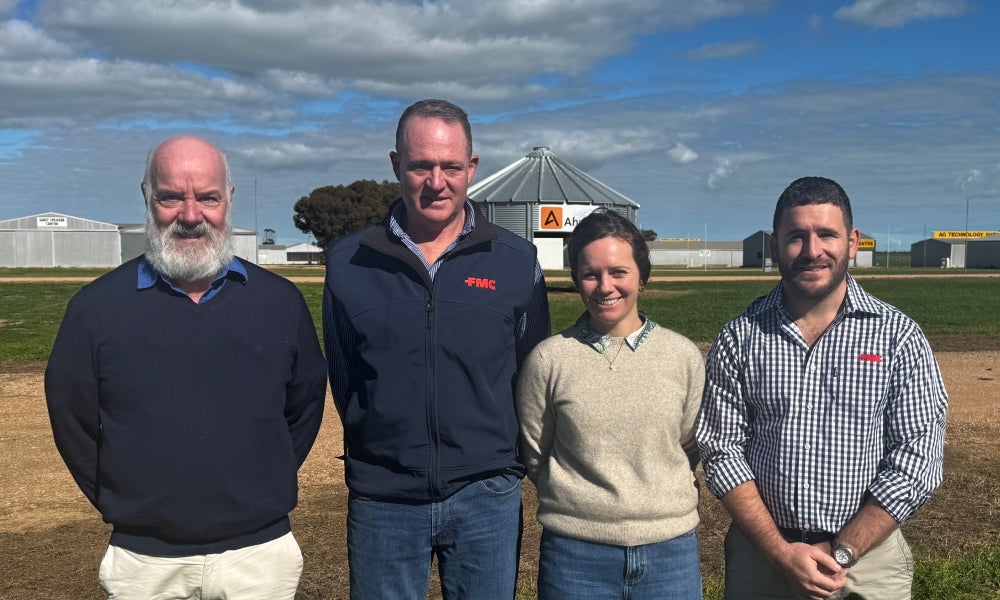
Over recent months, FMC brought growers, agronomists and advisers together across South Australia and Victoria for a series of practical IPM workshops with Dr Paul Horne and Rebecca Addison from IPM Technologies.
The aim was not to prescribe a single approach to pest control. Instead, the workshops explored how monitoring, beneficial insects, cultural practices and selective use of chemistry can work together to create pest management programs that are effective in the paddock and commercially realistic for growers.
Importantly, the conversations reinforced that IPM isn’t about avoiding insecticides. It’s about making more informed decisions about how and when different pest management tools are used - and considering their role within the wider cropping program.
Looking at the whole system
One of the strongest themes to emerge from the workshops was the value of understanding more than simply which pest is present.
Beneficial insects were a particular area of interest, with discussions exploring how to identify them, the role they can play in pest management and how different treatment decisions may affect them. Participants also developed practical IPM plans, considering how chemical, biological and cultural controls could work together within existing cropping programs.
As one workshop participant put it, “consider what you can’t see, it could be what saves your bottom line.”
Others wanted even more time dedicated to insect identification, beneficial lifecycles and understanding how these factors can influence pesticide choice - demonstrating an appetite to move beyond simply identifying a pest towards understanding the wider system operating within the crop.
That thinking is particularly important when broad-spectrum chemistry can provide a straightforward solution to an immediate problem, but may not always be the best fit for the longer-term pest management program.
Better decisions today, more options tomorrow
For FMC, supporting IPM is part of a wider commitment to stewardship.
“As an industry, we're facing increasing pressure from insecticide resistance, changing pest pressures and the need to preserve the tools we already have available,” FMC Area Business Manager SA, Jock Neumann said.
“We believe education and stewardship are an important part of the solution, helping growers understand how cultural, biological and chemical controls can work together as part of a broader IPM approach.”
That means continuing to develop effective crop protection technologies, while also helping growers and advisers understand where and when those technologies best fit.
The workshop series provided an opportunity to put that approach into practice - sharing knowledge, challenging established thinking and giving participants practical tools to build IPM strategies suited to their own farming systems.
Because ultimately, successful IPM isn’t about using fewer tools. It’s about using the tools available more strategically - protecting crops today while helping preserve effective pest management options for the future.