
Catulia® Bionematicide is not registered for sale or use in Australia. An application for registration is under review of the APVMA. No offer for sale, sale, or use of this product is permitted prior to issuance of the required APVMA registration. Any trial results or technical information presented do not imply APVMA registration or approved label claims.
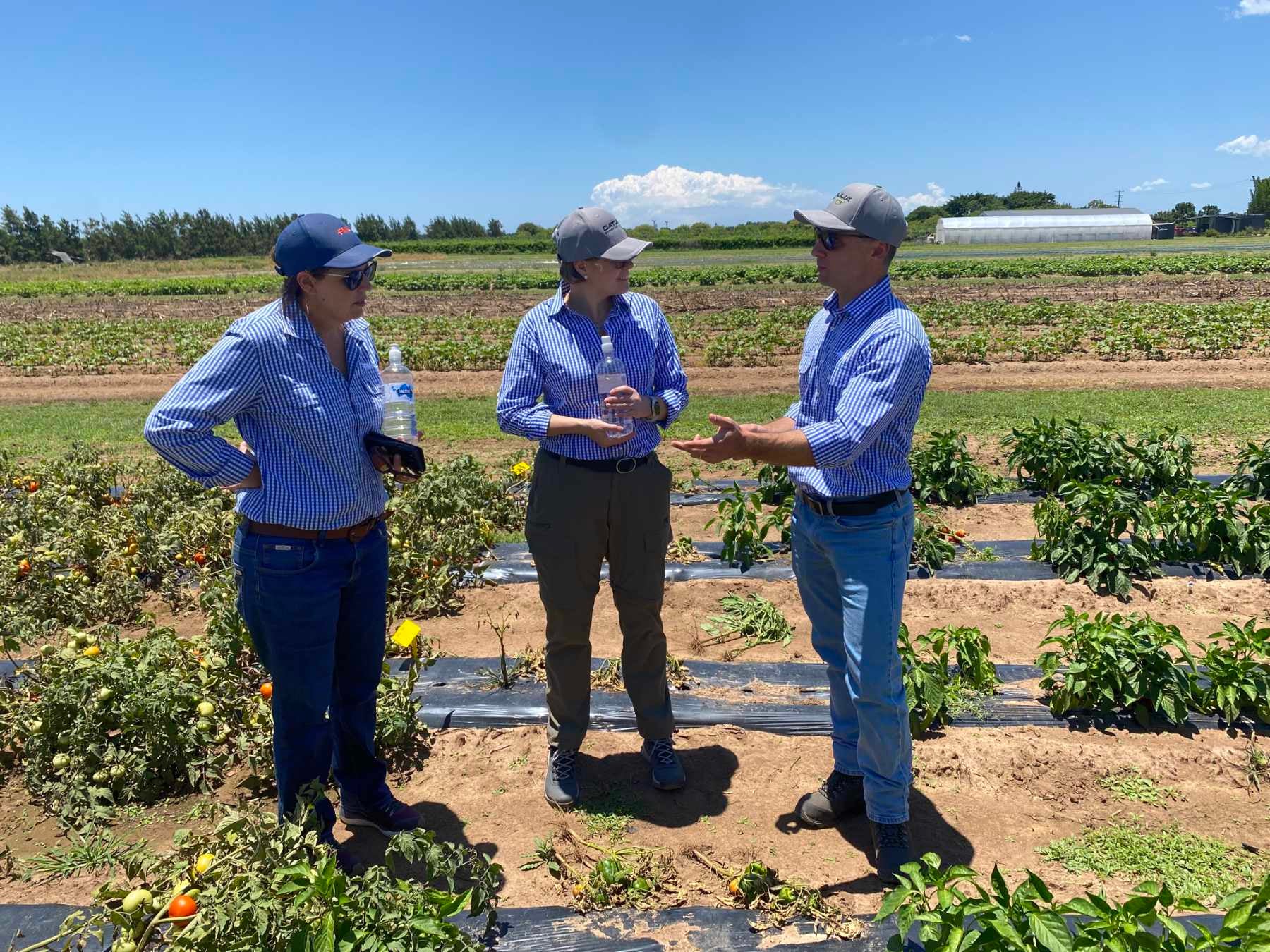
Root-knot nematodes are among the most damaging soil pests in vegetable production. While they represent only a small proportion of the nematodes present in soil, their impact on crop performance can be significant.
Dr. Sylwia Fudali-Alves, a nematologist who has been working on Catulia® for more than a decade, says understanding how these pests interact with crops is key to developing effective management strategies.
“Nematodes are microscopic worms that live in the soil,” she explains.
“Most of them are beneficial. However, plant-parasitic nematodes, although they represent only around 10% of the total, can have devastating effects on crops.”
A biological approach to nematode control
Catulia® is a microbial-based biological nematicide developed to help protect crops from plant-parasitic nematodes while supporting overall root health. The formulation contains endospores from two Bacillus strains, selected and combined to improve performance and consistency.
“These two strains were combined to provide better protection against nematodes and greater reliability in the field,” Dr. Fudali-Alves says.
One of the key features of these microbes is their ability to colonise plant roots early in crop development. Once established, the bacteria form a protective biofilm around the root system.
“This biofilm acts like a natural barrier that protects the roots from nematodes,” Dr. Fudali-Alves explains.
Supporting stronger root systems
Beyond nematode control, trials have shown additional benefits for root development.
According to Dr. Fudali-Alves, plants treated with Catulia® often demonstrate:
- Improved root system development
- Stronger root architecture
- Better water uptake
- More efficient nutrient absorption.
These improvements help plants tolerate minor root damage and maintain crop performance even when nematodes are present.
“In treated crops we often see better plant establishment and stronger early vigour,” she says.
Because Catulia® works by colonising the root zone, timing of application is critical. The goal is to establish the microbial population as soon as roots enter the soil.
“You want to protect the roots as soon as they go into the soil,” Dr. Fudali-Alves says.
A second application later in early crop development helps reinforce colonisation and maintain protection throughout the season.
“It acts like insurance, ensuring the root colonisation remains stable.”
Designed to fit into crop protection programs
Compatibility testing has also been a focus during development. Researchers have evaluated around 37 different tank mix partners, including insecticides, fungicides and fertilisers.
“We didn’t observe any issues with physical compatibility,” Dr. Fudali-Alves says.
This flexibility allows Catulia® to be integrated into existing crop protection programs and application schedules.
Supporting soil biology
Another advantage of biological nematicides is their ability to work within the soil ecosystem rather than disrupting it. Catulia® acts locally around the root zone and does not significantly affect free-living nematodes or beneficial soil organisms.
Healthy soils contain a diverse community of microorganisms, including fungi, microbes and beneficial nematodes, which play an important role in nutrient cycling and crop health.
“Soils with high microbial diversity help keep harmful organisms in check,” Dr. Fudali-Alves explains.
Visible benefits above and below ground
Across trials and research studies, the benefits of Catulia® are often visible both above and below the soil surface.
“We see stronger plant vigour, better establishment and more robust root systems,” she says.
“Importantly, we also see significantly less root damage from nematodes.”
As biological solutions continue to develop, tools like Catulia® are providing growers with new options to manage nematodes while supporting healthier soils and more resilient cropping systems.